Showing posts with label nanoengineering. Show all posts

Saturday, 21 January 2012

Nano-enhanced Vehicle and Body Armour


Halloysite nanotubes imaged at Cornell University

NaturalNano Signs Development and Supply Agreement for Improved Vehicle and Body Armour Products
(Nanowerk News) NaturalNano and Sparta Armor announced that the companies have entered into an exclusive Joint Development and Supply Agreement to utilize their combined technologies. NaturalNano and Sparta Armor will develop a range of products and applications that combine their respective patented technologies to create a new class of high performance additives. These will significantly improve the mechanical properties of Sparta's Vehicle and Body Armour materials. Under the agreement, NaturalNano and Sparta will produce new products using NaturalNano's Halloysite Natural Tubes (HNT) which Sparta will sell exclusively.

Developments in Nanotechnology is a rapidly expanding field and the next step in the cycle is already happening with convergences between DNA manipulation, nanotechnology, computing, human biological sciences including neurology.
My soon to be published book is built upon three years of closely following developments in these fields and extrapolating forwards to the impact of viable convergences on everyday life. Watch this space.

Halloysite nanotubes imaged at Alfred University with a transmission electron microscope

Thursday, 17 November 2011

New material can enhance energy, computer, lighting technologies


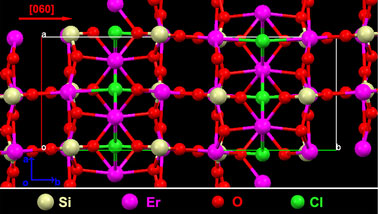
(Nanowerk News 16 Nov 2011) Arizona State University researchers have created a new compound crystal material that promises to help produce advances in a range of scientific and technological pursuits.
ASU electrical engineering professor Cun-Zheng Ning says the material, called erbium chloride silicate, can be used to develop the next generations of computers, improve the capabilities of the Internet, increase the efficiency of silicon-based photovoltaic cells to convert sunlight into electrical energy, and enhance the quality of solid-state lighting and sensor technology.
Ning's research team of team of students and post-doctoral degree assistants help synthesize the new compound in ASU's Nanophotonics Lab in the School of Electrical, Computer and Energy Engineering, one of the university's Ira A. Fulton Schools of Engineering.
The lab's erbium research is supported by the U.S. Army Research Office and U.S. Air Force Office of Scientific Research. Details about the new compound are reported in the Optical Materials Express on the website of the Optical Society of America ("Single-crystal erbium chloride silicate nanowires as a Si-compatible light emission material in communication wavelength").