Saturday, 19 November 2011


Friday, 18 November 2011
A.I as good as thought?

Scientists are getting closer to the dream of creating computer systems that can replicate the brain.
Researchers at the Massachusetts Institute of Technology have designed a computer chip that mimics how the brain's neurons adapt in response to new information More on the Jump here >.AI moves closer with brain chip
Thursday, 17 November 2011
New material can enhance energy, computer, lighting technologies
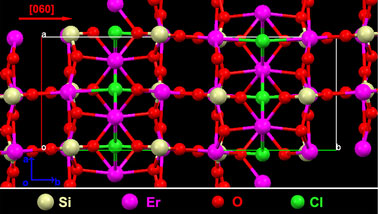
(Nanowerk News 16 Nov 2011) Arizona State University researchers have created a new compound crystal material that promises to help produce advances in a range of scientific and technological pursuits.
ASU electrical engineering professor Cun-Zheng Ning says the material, called erbium chloride silicate, can be used to develop the next generations of computers, improve the capabilities of the Internet, increase the efficiency of silicon-based photovoltaic cells to convert sunlight into electrical energy, and enhance the quality of solid-state lighting and sensor technology.
Ning's research team of team of students and post-doctoral degree assistants help synthesize the new compound in ASU's Nanophotonics Lab in the School of Electrical, Computer and Energy Engineering, one of the university's Ira A. Fulton Schools of Engineering.
The lab's erbium research is supported by the U.S. Army Research Office and U.S. Air Force Office of Scientific Research. Details about the new compound are reported in the Optical Materials Express on the website of the Optical Society of America ("Single-crystal erbium chloride silicate nanowires as a Si-compatible light emission material in communication wavelength").
Graphene the next generation of chips.

ScienceDaily (Oct. 9, 2011) — The world's thinnest, strongest and most conductive material, discovered in 2004 at the University of Manchester by Professor Andre Geim and Professor Kostya Novoselov, has the potential to revolutionize material science.
By sandwiching two sheets of graphene with another two-dimensional material, boron nitrate, the team created the graphene 'Big Mac' -- a four-layered structure which could be the key to replacing the silicon chip in computers.
Wednesday, 16 November 2011
New computer chip models how neurons communicate with each other at synapses

ScienceDaily (Nov. 15, 2011) — For decades, scientists have dreamed of building computer systems that could replicate the human brain's talent for learning new tasks.
MIT researchers have now taken a major step toward that goal by designing a computer chip that mimics how the brain's neurons adapt in response to new information. This phenomenon, known as plasticity, is believed to underlie many brain functions, including learning and memory.
Monday, 14 November 2011
DNA based nanomaterials get another boost
Controlled growth of DNA nanomaterials opens new applications in nanoelectronics
Nanowerk News) DNA-based nanomaterials are
key precursors for the bottom- up fabrication of
a range of high-performance nanoscale devices
such as biosensors and nanoelectronics because
of their ability to self-assemble into well-defined
structures. However, the lack of control
encountered during the deposition of these
nanostructures on surfaces has hampered their
application in practical devices.
Sung Ha Park, Yonghan Roh and colleagues
from Sungkyunkwan University and the
Samsung Advanced Institute of Technology in
Korea have now developed a surface-promoted
method that allows for the precise control of
DNA crystal growth on silica substrates
("Coverage Control of DNA Crystals Grown by
Silica Assistance" ).
Tuesday, 8 November 2011
Nanoskin for your touchy, feely android (or exosuit)
A team at Stanford's Bao Research Group have developed artificial skin. This is a stretchable, transparent skin-like sensor that is elastic and can also sense touch and pressure like the real thing.
Sunday, 6 November 2011
Cybercrime, a multibillion dollar business!
To stop cybercrime we need to think like the criminals http://gu.com/p/335bz
The Guardian has a pretty good artice on how the UK is progressing and working on tackling cybercrime

"Efforts to combat cybercrime concentrate on enhanced security, but intercepting the kids drawn into its web might prove better"
A multi-billion dollar business, a recession, thousands kicked from work every week, no jobs for kids. Hmm, The govt's got its work cut out!
The Guardian has a pretty good artice on how the UK is progressing and working on tackling cybercrime

"Efforts to combat cybercrime concentrate on enhanced security, but intercepting the kids drawn into its web might prove better"
A multi-billion dollar business, a recession, thousands kicked from work every week, no jobs for kids. Hmm, The govt's got its work cut out!
Popularity of nanotechnology taking off
Community Day at UAlbany NanoCollege draws largest-ever crowd to explore nanotechnology
 (Nanowerk News) A record crowd of more than 1,200 visitors of all ages from throughout New York State received an inside look at the exciting world of nanotechnology today when they participated in Community Day at the College of Nanoscale Science and Engineering (CNSE) of the University at Albany, one of the highlights of CNSE's one-of-a-kind community and educational outreach initiative known as "NANOvember."
Here's the link to Nanovember
Here's the link to Nanovember
Wednesday, 2 November 2011
No Hiding Place
Thinking of taking your computer or smartphone abroad? You can safely assume that at any point, a government 'cyber-crime or anti-terrorist team can hack into your computer to see what you are up to.
Just dont accidentally snap.a picture of a secret government building or agent, or email/chat/sms something disrespectful while you are out there.
Governments turn to hacking techniques for surveillance of citizens http://gu.com/p/33357
Tuesday, 1 November 2011
A "Small" History of Nanotechnology
For those of you flummoxed by all this nanotechnology stuff, here's one of the best sites around for a fascinating and very readable introduction to nanotechnology and how it all kicked off.

"The site explores and presents information on technological activities (and their associated social implications) that have the capacity to not only enhance our survival probability as a species, but to improve the quality of life as we move along the evolutionary path. We are non-partisan, and are neither anti nor pro-religious, preferring to remain open or at least tolerant regarding theories and beliefs which can be neither proven nor refuted scientifically. We are proponents of science and technology in the sense of being realists in recognizing that technology is coming whether we as a species or whether any one of us as an individual like it or not, and believe that the most effective action we can take is to learn more about technology in order to collectively guide its proper use toward a positive future. This site is intended primarily for the layperson, and is both factual and speculative in nature. It uses the interdisciplinary relationship of several main sciences to explore human advancement "
DNA synthesis and nanotechnology.
The nanoparticles inside Alister were readily absorbed by him because they contained elements of his DNA signature.
The possibility of creating nanoparticles with complex functionality such as interfacing with the human nervous system and able to network wirelessly, powered by the bodies own energy requires the convergence of several different technologies. nanotechnology obviously and manipulation of DNA.
Success in both these fields is progressing faster with each new discovery and innovation.
But convergence is always the rule.
Here we have news of DNA being synthesised and folded into unique nanoscale structures - another step in the building blocks to complex nanoparticles operating within the nervous system
(Nanowerk News) In the emerging field of synthetic biology, engineers use biological building blocks, such as snippets of DNA, to construct novel technologies. One of the key challenges in the field is finding a way to quickly and economically synthesize the desired DNA strands. Now scientists from Duke University have fabricated a reusable DNA chip that may help address this problem by acting as a template from which multiple batches of DNA building blocks can be photocopied. The researchers have used the device to create strands of DNA which they then folded into unique nanoscale structures.
Add this development to my other blog post and you begin to get the picture of how the convergence of nanotechnology, DNA creation and genetic manipulation is creating an environment for a revolutionary surge in human evolution.

The possibility of creating nanoparticles with complex functionality such as interfacing with the human nervous system and able to network wirelessly, powered by the bodies own energy requires the convergence of several different technologies. nanotechnology obviously and manipulation of DNA.
Success in both these fields is progressing faster with each new discovery and innovation.
But convergence is always the rule.
Here we have news of DNA being synthesised and folded into unique nanoscale structures - another step in the building blocks to complex nanoparticles operating within the nervous system
(Nanowerk News) In the emerging field of synthetic biology, engineers use biological building blocks, such as snippets of DNA, to construct novel technologies. One of the key challenges in the field is finding a way to quickly and economically synthesize the desired DNA strands. Now scientists from Duke University have fabricated a reusable DNA chip that may help address this problem by acting as a template from which multiple batches of DNA building blocks can be photocopied. The researchers have used the device to create strands of DNA which they then folded into unique nanoscale structures.
Add this development to my other blog post
In the Spring of 2008 Scripps College ran an excellent and inspiring series of events entitled: Human Evolution 2.0: Biotechnology and the Future of Human Nature (Spring 2008)
Below is the full text from the web page. I recommend you check out the page here

At the start of the 21st century, we find ourselves on the threshold
of a new age in which rapidly converging biosciences and technologies
(genomics, genetic engineering, cloning, stem cell research, artificial
reproduction, neurotechnologies, artificial intelligence, robotics,
information technology, and nanotechnology) have the potential to not
only dramatically increase our understanding of human life, but also
radically transform human nature itself.
At stake in this biotech revolution is not simply the greater control
we might gain over our biological limitations (by treating diseases,
alleviating pain, slowing the aging process, etc.), but, beyond these
therapeutic benefits, what is at stake is the power to determine the
future of our species as humans. The potential development of "designer
babies," synthetic genes, genetic interventions, augmented cognitive
powers, cyborgs, and of all forms of human enhancement technologies
raise both hopes and fears. Will these developments make us better
humans? Will they inalterably change what it means to be human? Or will
they make the very notion of human nature obsolete? To help us consider
the promises and risks of emerging biotechnologies, we are inviting
scientists, social scientists, legal scholars, bioethicists, and
neuroethicists to discuss with us the moral, social, legal, economic and
political implications of the new biosciences.
View Events, Lectures, and Series Information
View Events, Lectures, and Series Information
Subscribe to:
Posts (Atom)