Science and humour podcast.
An inspired and inspiring mix. Ideal brain food for scifi writers and readers.
http://downloads.bbc.co.uk/podcasts/radio4/timc/rss.xml
Saturday, 19 November 2011
The Infinite Monkey Cage


More Extreme Weather On The Way

Have we gone beyond the tipping point or is there time to start cleaning up our act and save the planet?
Yes - Faster than speed of light!
Neutrino experiment repeat at Cern finds same result
 The team which found that neutrinos may travel faster than light has carried out an improved version of their experiment - and confirmed the result.
If confirmed by other experiments, the find could undermine one of the basic principles of modern physics.

If confirmed by other experiments, the find could undermine one of the basic principles of modern physics.
News from the BBC website
The Ultimate 'stand out from the crowd' accessory!
Want a proper phone accessory for your smartphone?

Turn back the clock with the MoshiMoshi 01H Retro Handset. Click here for a larger image.
Key Features
Compatible with all 3.5mm jack mobile phones and computers, including iPhone, BlackBerry, iPad, and the latest MacBooks.
One touch button for convenient pick-up/hang-up directly from the handset (not all mobile phone support function).
Noise-reducing technology for a crisp and polished sound.
Luxurious soft-touch finish for ultimate comfort and feel.
Eliminates up to 99 percent of the radiation absorbed compared to a direct use of mobile phones.
Manufacturer's Description
Developed by renowned French designer David Turpin, the MoshiMoshi 01H Retro Handset combines high style with high functionality, uniting the comfort and safety of a handset telephone with the convenience of the mobile phone. The chic design combines classic style with modern elegance, resulting in a fashionable and comfortable handset finished with a soft luxurious texture.
Turn back the clock with the MoshiMoshi 01H Retro Handset. Click here for a larger image.
Key Features
Compatible with all 3.5mm jack mobile phones and computers, including iPhone, BlackBerry, iPad, and the latest MacBooks.
One touch button for convenient pick-up/hang-up directly from the handset (not all mobile phone support function).
Noise-reducing technology for a crisp and polished sound.
Luxurious soft-touch finish for ultimate comfort and feel.
Eliminates up to 99 percent of the radiation absorbed compared to a direct use of mobile phones.
Using DNA To Shape Nanostructures
Using DNA To Shape Nanostructures
Chemists and materials scientists are trying to learn to build ultra-small, precisely ordered structures for use in optics, electronics, and other applications. Writing in the journal Science, Chad Mirkin and colleagues describe a way to use snippets of DNA to tailor the shape and size of crystal structures, tweaking them to fit specific uses.
"we can program DNA and building blocks to do that. So the idea here is to take tiny bits of matter, nanoparticles, and to attach strands of DNA that have a preconceived and designed code that then guides them through an assembly process based upon known DNA recognition properties to assemble into macroscopic structures that have properties that are defined by the arrangement of those particles within the extended structure."
Looking ahead
When I was writing the first 'Cloud' Book, I was just hypothesising that at some point DNA models could be used to create nanoparticles.I didn't think that the design of the Nanoparticles created by Alister's mother, modelled on the structure of adolescent neurons - fast learning and creative -was closer to reality that I'd imagine. This opens up a whole new world of genetic and nanotechnology. Meanwhile other people are working on nanotechnology that mimics the way parts of the brain works.
The paths of DNA science, nanotechnology, computing, neuroscience are converging with greater frequency and variation at an increasing rate.
Why is all this possible?
Simply because if you go down far enough into the any science - biological or material and it's all chemistry, if you go down even further and it's all physics. And it's the knowledge about and ability to manipulate matter on such a nano and chemical scale, where you are down to the common ground of Stuff, that allows this convergence.
New 'smart' material could help tap medical potential of tissue-penetrating light
New 'smart' material could help tap medical potential of tissue-penetrating light
ScienceDaily (Nov. 16, 2011) — Scientists
are reporting development and successful
initial testing of the first practical "smart"
material that may supply the missing link
in efforts to use in medicine a form of
light that can penetrate four inches into
the human body. Their report on the new
polymer or plastic-like material, which has
potential for use in diagnosing diseases
and engineer new human tissues in the
lab, appears in ACS' journal
Macromolecules .
Friday, 18 November 2011
A.I as good as thought?

Scientists are getting closer to the dream of creating computer systems that can replicate the brain.
Researchers at the Massachusetts Institute of Technology have designed a computer chip that mimics how the brain's neurons adapt in response to new information More on the Jump here >.AI moves closer with brain chip
Thursday, 17 November 2011
New material can enhance energy, computer, lighting technologies
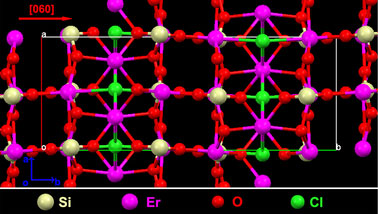
(Nanowerk News 16 Nov 2011) Arizona State University researchers have created a new compound crystal material that promises to help produce advances in a range of scientific and technological pursuits.
ASU electrical engineering professor Cun-Zheng Ning says the material, called erbium chloride silicate, can be used to develop the next generations of computers, improve the capabilities of the Internet, increase the efficiency of silicon-based photovoltaic cells to convert sunlight into electrical energy, and enhance the quality of solid-state lighting and sensor technology.
Ning's research team of team of students and post-doctoral degree assistants help synthesize the new compound in ASU's Nanophotonics Lab in the School of Electrical, Computer and Energy Engineering, one of the university's Ira A. Fulton Schools of Engineering.
The lab's erbium research is supported by the U.S. Army Research Office and U.S. Air Force Office of Scientific Research. Details about the new compound are reported in the Optical Materials Express on the website of the Optical Society of America ("Single-crystal erbium chloride silicate nanowires as a Si-compatible light emission material in communication wavelength").
Graphene the next generation of chips.

ScienceDaily (Oct. 9, 2011) — The world's thinnest, strongest and most conductive material, discovered in 2004 at the University of Manchester by Professor Andre Geim and Professor Kostya Novoselov, has the potential to revolutionize material science.
By sandwiching two sheets of graphene with another two-dimensional material, boron nitrate, the team created the graphene 'Big Mac' -- a four-layered structure which could be the key to replacing the silicon chip in computers.
Wednesday, 16 November 2011
New computer chip models how neurons communicate with each other at synapses

ScienceDaily (Nov. 15, 2011) — For decades, scientists have dreamed of building computer systems that could replicate the human brain's talent for learning new tasks.
MIT researchers have now taken a major step toward that goal by designing a computer chip that mimics how the brain's neurons adapt in response to new information. This phenomenon, known as plasticity, is believed to underlie many brain functions, including learning and memory.
Monday, 14 November 2011
DNA based nanomaterials get another boost
Controlled growth of DNA nanomaterials opens new applications in nanoelectronics
Nanowerk News) DNA-based nanomaterials are
key precursors for the bottom- up fabrication of
a range of high-performance nanoscale devices
such as biosensors and nanoelectronics because
of their ability to self-assemble into well-defined
structures. However, the lack of control
encountered during the deposition of these
nanostructures on surfaces has hampered their
application in practical devices.
Sung Ha Park, Yonghan Roh and colleagues
from Sungkyunkwan University and the
Samsung Advanced Institute of Technology in
Korea have now developed a surface-promoted
method that allows for the precise control of
DNA crystal growth on silica substrates
("Coverage Control of DNA Crystals Grown by
Silica Assistance" ).
Tuesday, 8 November 2011
Subscribe to:
Posts (Atom)